Flakes on the shoulders, itching on the scalp, and embarrassment in public can make anyone worry: “Do I have dandruff, or is my scalp just dry?” This is one of the most common questions people ask in skin and hair clinics. The confusion is understandable because both dry scalp and dandruff can cause visible flakes, …

Flakes on the shoulders, itching on the scalp, and embarrassment in public can make anyone worry:
“Do I have dandruff, or is my scalp just dry?” This is one of the most common questions people ask
in skin and hair clinics. The confusion is understandable because both dry scalp and dandruff can
cause visible flakes, itching, and discomfort. However, they are not the same condition, and treating
them the wrong way can make the problem worse instead of better.
Dry scalp usually happens when the skin on the scalp loses moisture. Dandruff, on the other hand,
is commonly linked with excess oil, scalp irritation, and a condition called seborrheic dermatitis.
In simple words, dry scalp is mostly a moisture problem, while dandruff is usually an oil, yeast,
and inflammation-related scalp condition.
Understanding the difference matters because dry scalp may improve with gentle, moisturizing care,
while dandruff often needs anti-dandruff or medicated shampoo. A moisturizing oil or heavy conditioner
may help dry scalp, but it can sometimes worsen dandruff by increasing greasiness. Similarly, strong
dandruff shampoos may control flakes caused by dandruff, but they may irritate a truly dry scalp if
used too aggressively.
This article explains the key differences between dry scalp and dandruff, their symptoms, causes,
home care, treatment options, prevention tips, and when you should visit a dermatologist. It is written
to help patients understand scalp health in a practical, safe, and easy-to-follow way.
What Is Dry Scalp?
Dry scalp means the skin of the scalp does not have enough moisture. Just like dry skin on the hands,
face, or legs, the scalp can become tight, itchy, rough, and flaky when its moisture barrier becomes weak.
The flakes from dry scalp are often small, white, and powdery. They may fall easily from the hair and are
usually not oily or sticky.
Dry scalp can happen due to many reasons. Cold weather, low humidity, frequent washing, hot water, harsh
shampoos, chemical treatments, hair dyes, excessive heat styling, and using the wrong hair products can all
disturb the scalp’s natural protective barrier. When the barrier becomes weak, the scalp loses moisture more
easily. This leads to dryness, itching, tightness, and fine flaking.
Some people are naturally more prone to dry skin. If you often have dry hands, dry face, cracked heels,
or sensitivity to soaps and fragrances, your scalp may also react in the same way. In such cases, the problem
is not “dirty hair” or poor hygiene. It is often a skin barrier issue.
Dry scalp may also appear with skin conditions like eczema, psoriasis, or allergic contact dermatitis.
Therefore, if dryness is persistent, painful, very itchy, or associated with redness and hair fall, it should
not be ignored.
What Is Dandruff?
Dandruff is a common scalp condition that causes flakes, itching, and sometimes redness or irritation.
In many adults, dandruff is considered a mild form of seborrheic dermatitis. It usually affects oily areas
of the scalp, and the flakes may look larger, greasier, yellowish-white, or more stuck to the scalp compared
with dry scalp flakes.
Dandruff is not caused by poor hygiene, and it is not contagious. People often feel embarrassed because
flakes are visible on the hair, shoulders, eyebrows, beard, or clothing, but dandruff is a very common condition.
Many people experience it repeatedly, especially during seasonal changes, stressful periods, or when the scalp
becomes oily.
One major factor in dandruff is the relationship between scalp oil and a naturally occurring yeast called
Malassezia. This yeast lives on many people’s skin, but in some individuals, it can trigger irritation,
inflammation, and faster shedding of skin cells. When skin cells shed too quickly and mix with oil, they form
visible flakes.
Dandruff can be mild, moderate, or stubborn. Some people only notice flakes in winter. Others have recurring
dandruff that improves with treatment but comes back again when treatment stops. This does not always mean
treatment has failed; it often means the scalp needs a proper maintenance plan.
Dry Scalp vs Dandruff: The Main Difference
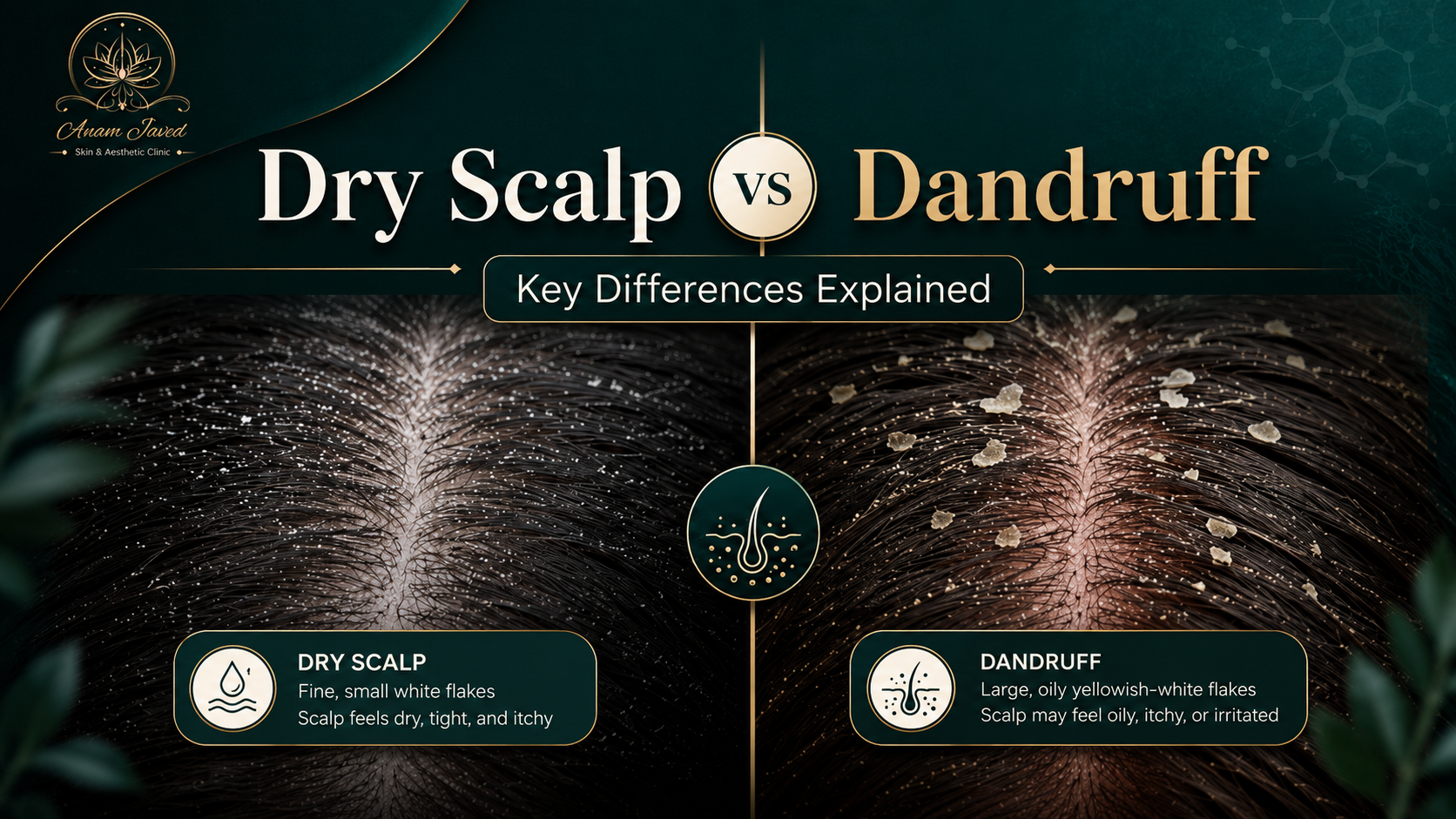
The simplest way to understand the difference is this: dry scalp is mainly a moisture problem, while dandruff
is mainly an oil, yeast, and inflammation problem.
In dry scalp, the skin lacks hydration. It may feel tight, rough, sensitive, or uncomfortable after shampooing.
The flakes are usually small, dry, and white. The scalp may look normal or slightly irritated, but it is not
usually greasy.
In dandruff, the scalp may be oily, itchy, red, or irritated. The flakes are often larger and may appear greasy
or yellowish. They may stick to the scalp and hair. Dandruff may also affect other oily areas such as eyebrows,
around the nose, beard area, ears, or chest.
This difference is important because the treatment direction is different. Dry scalp needs gentle care,
moisture support, and barrier repair. Dandruff usually needs ingredients that reduce yeast, oil buildup,
scaling, and inflammation.
Quick Comparison: Dry Scalp vs Dandruff
| Feature | Dry Scalp | Dandruff |
|---|---|---|
| Main cause | Loss of moisture | Oil, yeast, and inflammation |
| Flake type | Small, dry, white, powdery flakes | Larger, oily, white or yellowish flakes |
| Scalp feel | Tight, dry, sensitive | Oily, itchy, irritated |
| Common triggers | Hot water, harsh shampoo, cold weather, over-washing | Oil buildup, stress, weather change, seborrheic dermatitis |
| Other skin signs | Dry skin on face, hands, or body may be present | Scaling may appear on eyebrows, nose folds, ears, or beard |
| Best first step | Gentle shampoo and moisturizing scalp care | Anti-dandruff shampoo or dermatologist-guided treatment |
Key Symptoms of Dry Scalp
Dry scalp usually feels tight, rough, or uncomfortable. Many people say their scalp feels stretched after
washing. The flakes are often small and dry, almost like white dust. They may fall easily when the hair is
brushed or touched.
Common symptoms of dry scalp include:
- Small white flakes that look powdery
- Itching that may feel worse after shampooing
- A tight or stretched feeling on the scalp
- Dryness in other body areas, such as face, hands, or legs
- Sensitivity to strong shampoos, fragrance, or hair dye
- Mild redness or irritation
- A scalp that does not feel oily
Dry scalp can become worse with hot showers, frequent shampooing, air conditioning, winter dryness, sunburn,
and chemical hair treatments. It may also worsen if a person uses alcohol-based hair sprays, strong anti-dandruff
shampoos too often, or products that strip natural oils from the scalp.
Key Symptoms of Dandruff
Dandruff usually causes visible flakes along with itching. The scalp may feel oily, irritated, or inflamed.
Flakes may be larger than dry scalp flakes and may stick to the hair roots or scalp surface.
Common symptoms of dandruff include:
- White or yellowish flakes
- Greasy or sticky scales
- Itchy scalp
- Redness or irritation
- Flakes that return again and again
- Oily scalp or oily hair roots
- Scaling around eyebrows, nose, ears, beard, or chest
- Worsening during stress or seasonal change
Some people notice dandruff even shortly after washing. Others feel that their scalp becomes oily quickly,
and the flakes become worse when they skip shampooing. This is why dandruff care usually requires a balanced
approach: enough cleansing to control oil and buildup, but not so much that the scalp becomes irritated.
Causes of Dry Scalp
Dry scalp is commonly caused by anything that removes moisture or irritates the scalp barrier. One of the biggest
causes is over-washing. Washing hair too frequently, especially with harsh shampoos, can remove natural oils that
protect the scalp. Hot water can make this worse by stripping away oils and increasing dryness.
Weather also plays a role. In winter or in dry climates, the air contains less moisture. Indoor heating and air
conditioning can further dry out the skin. In Pakistan, many people also experience scalp dryness due to sun
exposure, dust, hard water, frequent hair washing after sweating, or using strong anti-hair fall shampoos without
proper guidance.
Chemical hair treatments are another common trigger. Hair dye, bleaching, rebonding, keratin treatments,
straightening creams, and strong styling products can irritate the scalp. Sometimes the scalp becomes dry and
itchy after a salon treatment, and people mistake it for dandruff.
Dry scalp can also occur when a person has sensitive skin, eczema, or allergic contact dermatitis. If itching
starts after using a new shampoo, hair color, serum, oil, or styling gel, allergy or irritation may be involved.
Causes of Dandruff
Dandruff is more complex than simple dryness. It often involves oil production, yeast activity, scalp sensitivity,
and inflammation. Malassezia yeast feeds on scalp oils. In some people, this causes irritation and faster skin
cell turnover. The dead skin cells shed quickly and become visible flakes.
Dandruff may also worsen when hair is not washed enough, because oil and dead skin cells build up. However,
over-washing with harsh shampoo can irritate the scalp too. This is why balance is important.
Stress can also trigger or worsen dandruff. Many patients notice flare-ups during exams, business pressure,
lack of sleep, or emotional stress. Cold weather and seasonal changes can also make dandruff more noticeable.
Seborrheic dermatitis can be stubborn because it is a recurring condition. It may improve with shampoo but return
after a few weeks. This does not mean you should keep changing products randomly. It means your scalp may need
a proper treatment and maintenance plan from a dermatologist.
Common Mistakes People Make
One common mistake is applying heavy oil for every type of flaking. In dry scalp, a light moisturizing routine
may help, but in dandruff, heavy oiling can sometimes worsen greasiness and buildup. Many people apply oil
overnight repeatedly, then complain that flakes became thicker and itchier.
Another mistake is using anti-dandruff shampoo daily without guidance. Medicated shampoos can be helpful, but
overuse may irritate a dry or sensitive scalp. If the scalp is already dry, strong medicated shampoos may increase
tightness, itching, and irritation.
A third mistake is scratching aggressively. Scratching may give temporary relief, but it can damage the skin
barrier, cause soreness, increase inflammation, and sometimes lead to infection.
People also switch products too quickly. A shampoo may need consistent use for a few weeks before results are
clear. On the other hand, if burning, rash, swelling, or severe irritation occurs, the product should be stopped
and medical advice should be taken.
How to Treat Dry Scalp
For dry scalp, the goal is to restore moisture and protect the scalp barrier. Start with a gentle, fragrance-free
or mild shampoo. Avoid very strong clarifying shampoos unless prescribed or recommended. Wash with lukewarm water
instead of hot water.
Reduce washing frequency if you are washing daily and your scalp feels tight after every wash. Use a mild conditioner
on the hair lengths. If your scalp is very dry, a dermatologist may recommend a scalp lotion, hydrating serum, or
specific treatment depending on the cause.
Avoid applying random home remedies like lemon juice, baking soda, garlic paste, or undiluted essential oils because
they can irritate or burn the scalp. Natural does not always mean safe, especially for sensitive skin.
If dryness started after a hair dye or salon treatment, stop using the suspected product and consult a dermatologist.
Allergic reactions to hair dye can be serious and should not be ignored.
How to Treat Dandruff
For dandruff, the goal is to reduce flakes, oil buildup, yeast activity, and inflammation. Anti-dandruff shampoos
are usually the first-line option for mild to moderate dandruff. These shampoos may contain active ingredients such
as ketoconazole, selenium sulfide, zinc pyrithione, salicylic acid, coal tar, or other anti-dandruff agents.
Different ingredients work in different ways, so if one shampoo does not help, another may be more suitable.
The correct choice depends on the type of flakes, scalp oiliness, sensitivity, redness, itching, and previous
treatment history.
A common practical method is to massage the shampoo gently into the scalp, leave it for the recommended time, then
rinse thoroughly. Do not scratch harshly while shampooing. If dandruff is severe, inflamed, or recurring, a dermatologist
may prescribe stronger shampoo, antifungal lotion, or short-term anti-inflammatory treatment.
Dandruff often needs maintenance. Once symptoms improve, some patients may still need occasional anti-dandruff shampoo
use to prevent recurrence. A dermatologist can guide how often to use it safely.
When It May Not Be Simple Dandruff
Not every flaky scalp is dry scalp or dandruff. Sometimes the real cause is another skin condition. Scalp psoriasis
can cause thick scales and plaques. Eczema can cause intense itching and dryness. Fungal infection of the scalp can
cause scaling, redness, and sometimes patchy hair loss.
You should see a dermatologist if you have:
- Severe itching
- Pain, burning, or swelling
- Bleeding due to scratching
- Thick crusts or plaques
- Pus, sores, or signs of infection
- Patchy hair loss
- Flakes that do not improve after several weeks of proper care
- Rash on the face, ears, chest, or other body areas
- Dandruff in children that looks severe or unusual
A dermatologist can examine the scalp closely and decide whether the issue is dry scalp, dandruff, seborrheic dermatitis,
psoriasis, eczema, fungal infection, allergy, or another condition.
Expert Scalp Care with Dr. Anam Javed
Choosing the right treatment becomes much easier when your scalp is properly examined by a trained skin specialist.
This is where expert care matters. Dr. Anam Javed is known for a calm, patient-friendly, and detail-oriented approach
to skin, hair, and aesthetic concerns.
Instead of giving one generic shampoo to everyone, a good dermatologist looks at the scalp type, hair care routine,
product history, severity of itching, presence of redness, oiliness, hair fall, and any related skin conditions.
Dr. Anam Javed’s clinical approach reflects this kind of modern dermatology care: practical, honest, and focused on
long-term skin and scalp health.
Patients appreciate doctors who listen carefully, explain the condition in simple words, and give realistic treatment
plans. For people dealing with repeated dandruff, sensitive scalp, hair fall anxiety, or confusion between dryness and
dandruff, this kind of guidance can save time, money, and frustration.
At a professional skin clinic, scalp treatment is not just about removing flakes for a few days. The aim is to identify
the trigger, control symptoms safely, prevent recurrence, and protect hair and scalp health.
How a Dermatologist Diagnoses the Problem
In most cases, diagnosis starts with history and examination. The dermatologist may ask how long you have had flakes,
whether the flakes are dry or oily, whether the scalp is itchy or painful, and whether symptoms started after a new
shampoo, hair dye, oil, or salon treatment.
The doctor may also ask whether you have scaling on eyebrows, beard, ears, or nose folds; whether you have dry skin
elsewhere; whether you have hair fall or patchy hair loss; and whether you have used steroid lotions or medicated
shampoos before.
The scalp is then examined for redness, scaling pattern, oiliness, plaques, broken hair, infection, or allergic reaction.
Sometimes, if fungal infection is suspected, further testing may be advised.
This step is important because the same symptom — flakes — can come from different causes. The wrong treatment can
delay recovery. For example, using only moisturizing products for fungal infection will not solve the problem. Using
strong anti-dandruff products for allergic irritation may make burning worse.
Best Scalp Care Routine for Prevention
A good routine depends on your scalp type, but some general rules help most people. Use shampoos according to your
scalp condition, not just hair length. If your scalp is oily and dandruff-prone, you may need regular cleansing.
If your scalp is dry and sensitive, you may need a gentler routine.
Avoid very hot water. Lukewarm water is better for both dry scalp and dandruff-prone scalp. Rinse shampoo properly
because leftover product can irritate the scalp.
Do not share combs, towels, or hair brushes if infection is suspected. Clean your combs regularly. Avoid scratching
with nails.
Be careful with hair oils. Oiling is culturally common and can feel soothing, but it is not a cure for every scalp
problem. If oil worsens itching or flakes, stop and ask a dermatologist.
Avoid applying lemon, vinegar, baking soda, toothpaste, garlic, or harsh DIY mixtures on the scalp. These can cause
irritation, burns, and more inflammation.
Manage stress and sleep as much as possible. Stress does not cause every case, but it can worsen dandruff flare-ups
in many people.
Dry Scalp vs Dandruff: Which One Do You Have?
You may have dry scalp if your flakes are tiny, white, dry, and powdery; your scalp feels tight; your skin is dry
elsewhere; and symptoms worsen after harsh shampoo or hot water.
You may have dandruff if your flakes are larger, oily, yellowish-white, sticky, and recurring; your scalp feels greasy
or itchy; and you also notice scaling around eyebrows, nose, ears, or beard area.
However, self-diagnosis is not always accurate. Many people have a mixed picture: an oily scalp with irritated dry
patches, or dandruff worsened by harsh products. Some people also have dandruff along with hair fall, which causes
extra worry. In such cases, professional assessment is the safest route.
Frequently Asked Questions
1. Is dry scalp the same as dandruff?
No. Dry scalp and dandruff can both cause flakes, but they are different. Dry scalp is usually caused by lack of
moisture, while dandruff is often linked with oiliness, yeast activity, and inflammation.
2. Can oiling cure dandruff?
Not always. Oiling may soothe some dry scalps, but it can worsen dandruff in many people by increasing greasiness
and buildup. If oiling makes itching or flakes worse, stop and consult a dermatologist.
3. Why does dandruff keep coming back?
Dandruff can be recurring because it is often linked with scalp oil, yeast, inflammation, stress, and weather changes.
Many patients need a maintenance plan rather than one-time treatment.
4. Can dandruff cause hair fall?
Dandruff itself is not always the direct cause of hair fall, but severe itching, scratching, inflammation, and untreated
scalp conditions can contribute to increased shedding. If hair fall is noticeable, a dermatologist should examine the scalp.
5. When should I visit a dermatologist?
You should visit a dermatologist if flakes are severe, painful, recurring, associated with redness, sores, bleeding,
swelling, infection, or patchy hair loss, or if regular care does not improve the condition.
Final Thoughts
Dry scalp and dandruff may look similar, but they are different conditions with different causes and treatments.
Dry scalp is usually related to lack of moisture and skin barrier weakness. Dandruff is often linked with oiliness,
yeast activity, and inflammation. The flakes, scalp feel, triggers, and treatment response can help you tell them apart.
If your flakes are mild and clearly related to dryness, start with gentle shampoo, lukewarm water, and moisturizing
scalp care. If your scalp is oily, itchy, and repeatedly flaky, an anti-dandruff shampoo may help. But if symptoms are
severe, painful, recurring, spreading, or associated with hair loss, do not keep experimenting.
A dermatologist can identify the exact cause and guide you with a safe, personalized plan. With expert care from
Dr. Anam Javed, patients can receive professional scalp assessment, clear explanation, and treatment that fits their
actual scalp condition — not just guesswork.
Healthy scalp care begins with the right diagnosis. Once you know whether it is dry scalp, dandruff, or another scalp
condition, treatment becomes much easier and more effective.
Medical Disclaimer
This article is for general educational awareness only and does not replace a consultation with a qualified dermatologist.
If you have severe itching, redness, pain, infection, bleeding, patchy hair loss, or symptoms that do not improve with
basic care, please consult a skin specialist.
Book an Appointment
It’s easy and free!