Medically Reviewed | Updated May 2026 | 12 Min Read Skin aging is a universal biological process that begins earlier than most people realize — often in the mid-to-late twenties, long before wrinkles become visible in the mirror. Understanding the early signs of skin aging allows you to take proactive steps to slow the process, …

Medically Reviewed | Updated May 2026 | 12 Min Read
Skin aging is a universal biological process that begins earlier than most people realize — often in the mid-to-late twenties, long before wrinkles become visible in the mirror. Understanding the early signs of skin aging allows you to take proactive steps to slow the process, protect your skin, and maintain a healthy, youthful complexion for longer. This comprehensive guide explains exactly what happens to your skin as it ages, what the earliest warning signs look like, what causes them, and what science-backed strategies can help.
Table of Contents
- What Is Skin Aging?
- When Does Skin Aging Begin?
- Intrinsic vs. Extrinsic Aging
- Early Signs of Skin Aging
- Causes of Premature Skin Aging
- How Skin Ages at a Cellular Level
- Areas Most Affected First
- Early Signs by Skin Type
- Proven Treatments and Prevention Strategies
- Skincare Ingredients That Actually Work
- Lifestyle Habits That Accelerate Skin Aging
- When to See a Dermatologist
- Conclusion
- SEO Metadata
1. What Is Skin Aging?
Skin aging refers to the gradual structural and functional deterioration of the skin over time. It is one of the most visible aspects of the human aging process and results from a combination of internal biological changes and external environmental damage. As the skin ages, it loses its ability to retain moisture, repair itself efficiently, produce adequate collagen and elastin, and protect against oxidative stress.
The skin is the body’s largest organ and serves as the first line of defense against the environment. It is composed of three main layers: the epidermis (outermost layer), the dermis (middle layer containing collagen and elastin fibers), and the hypodermis (the deepest layer of fat and connective tissue). Changes in all three layers contribute to the signs of aging we see on the surface.
Skin aging is not purely cosmetic. Changes in skin structure and function affect wound healing, immune defense, thermoregulation, and sensory perception. Understanding skin aging is therefore both a cosmetic and a medical concern.
2. When Does Skin Aging Begin?
Most people associate skin aging with middle age, but the biological process begins much earlier than that.
- Mid-twenties: Collagen production begins to decline at approximately 1 percent per year after the age of 25. Cell turnover slows. The earliest microscopic changes in skin structure are already underway, even if they are not yet visible to the naked eye.
- Late twenties to early thirties: The first visible signs often appear — subtle fine lines around the eyes and mouth, a slight loss of radiance, and early changes in skin texture.
- Mid-thirties to forties: Loss of volume and elasticity becomes more noticeable. Fine lines deepen into wrinkles. Sun damage accumulated over years begins to manifest as uneven pigmentation and rougher texture.
- Fifties and beyond: Significant structural changes including skin laxity, deeper folds, thinning of the skin, and more pronounced pigmentation changes become apparent.
The key message is that the best time to start caring for your skin and protecting it from premature aging is in your twenties — before the visible signs appear. Prevention is significantly more effective and less costly than correction.
3. Intrinsic vs. Extrinsic Skin Aging
Dermatologists classify skin aging into two broad categories, each with distinct mechanisms and contributing factors.
Intrinsic (Chronological) Aging
Intrinsic aging is the natural, genetically programmed decline in skin function that occurs with the passage of time. It affects all people regardless of lifestyle or environment. Key features of intrinsic aging include:
- Progressive decline in collagen and elastin production
- Slower cell turnover and reduced skin renewal rate
- Decreased production of natural moisturizing factors in the skin
- Gradual thinning of both the epidermis and dermis
- Reduced activity of oil and sweat glands, leading to drier skin
- Decreased number and activity of melanocytes (pigment-producing cells)
Intrinsic aging produces relatively fine wrinkles, smooth but dry skin, and subtle volume loss. It is largely determined by genetics and cannot be prevented, only slowed.
Extrinsic (Environmental) Aging
Extrinsic aging is caused by external environmental factors and lifestyle choices that accelerate the natural aging process. This type of aging is largely preventable. The dominant cause is ultraviolet (UV) radiation from the sun — responsible for up to 80 percent of visible facial aging. Other contributors include smoking, pollution, poor diet, and sleep deprivation.
Extrinsic aging produces coarser wrinkles, uneven pigmentation, a leathery skin texture, dilated blood vessels, and a rougher skin surface. It is sometimes called photoaging when specifically caused by UV exposure.
4. Early Signs of Skin Aging
Recognizing the early signs of skin aging is the first step toward addressing them effectively. Here are the most common early indicators to watch for.
Fine Lines and Expression Lines
The very first wrinkles that appear are typically fine lines — shallow, faint lines that become visible when the face is in motion (during smiling, squinting, or frowning) and may disappear when the face is relaxed. Over time, repeated facial muscle contractions and declining collagen cause these dynamic expression lines to become permanent static wrinkles. Common locations for the earliest fine lines include:
- The outer corners of the eyes (crow’s feet)
- Horizontal lines across the forehead
- Vertical lines between the eyebrows (frown lines or glabellar lines)
- Fine lines around the lips
Loss of Skin Radiance and Dullness
One of the earliest and most noticeable changes in aging skin is a loss of the bright, luminous quality that characterizes young skin. This dullness occurs because cell turnover slows with age — dead skin cells accumulate on the surface more quickly than they are shed, creating a dull, uneven, and sometimes rough-textured complexion. Skin that once appeared naturally glowing may start to look tired and flat even after a full night of sleep.
Uneven Skin Tone and Early Pigmentation Changes
Early skin aging often manifests as subtle changes in skin tone evenness before obvious dark spots appear. The skin may develop a slightly patchy or blotchy appearance, with some areas appearing slightly darker or redder than others. This is caused by UV-driven overactivation of melanocytes (pigment-producing cells) in certain areas. As aging progresses, these early tone irregularities can develop into clearly defined age spots (solar lentigines) and hyperpigmentation patches.
Changes in Skin Texture
Young skin has a smooth, even texture due to regular cell turnover and an intact skin barrier. As aging begins, the texture becomes subtly rougher and more uneven. Pores may appear more visible as skin loses elasticity and the surrounding tissue becomes less firm. The skin surface may feel less smooth to the touch even before visible lines are prominent.
Dryness and Dehydration
Aging skin produces less sebum (natural skin oil) and fewer natural moisturizing factors, making it progressively drier and more prone to dehydration. Early signs include skin that feels tight after cleansing, looks dull or flakey in patches, and shows fine surface lines that look like crinkled tissue paper — especially noticeable under the eyes and on the cheeks. Dehydration lines differ from true wrinkles in that they are superficial and can be significantly improved with proper hydration.
Loss of Firmness and Early Sagging
As collagen and elastin fibers in the dermis decline, the skin gradually loses its firmness and ability to snap back after being stretched. Early loss of firmness may manifest as skin that feels slightly less taut than before, subtle softening of the jawline definition, and the beginning of nasolabial fold development (the lines running from the sides of the nose to the corners of the mouth). This is often more apparent when looking at photographs taken over several years rather than in daily mirror checks.
Under-Eye Changes
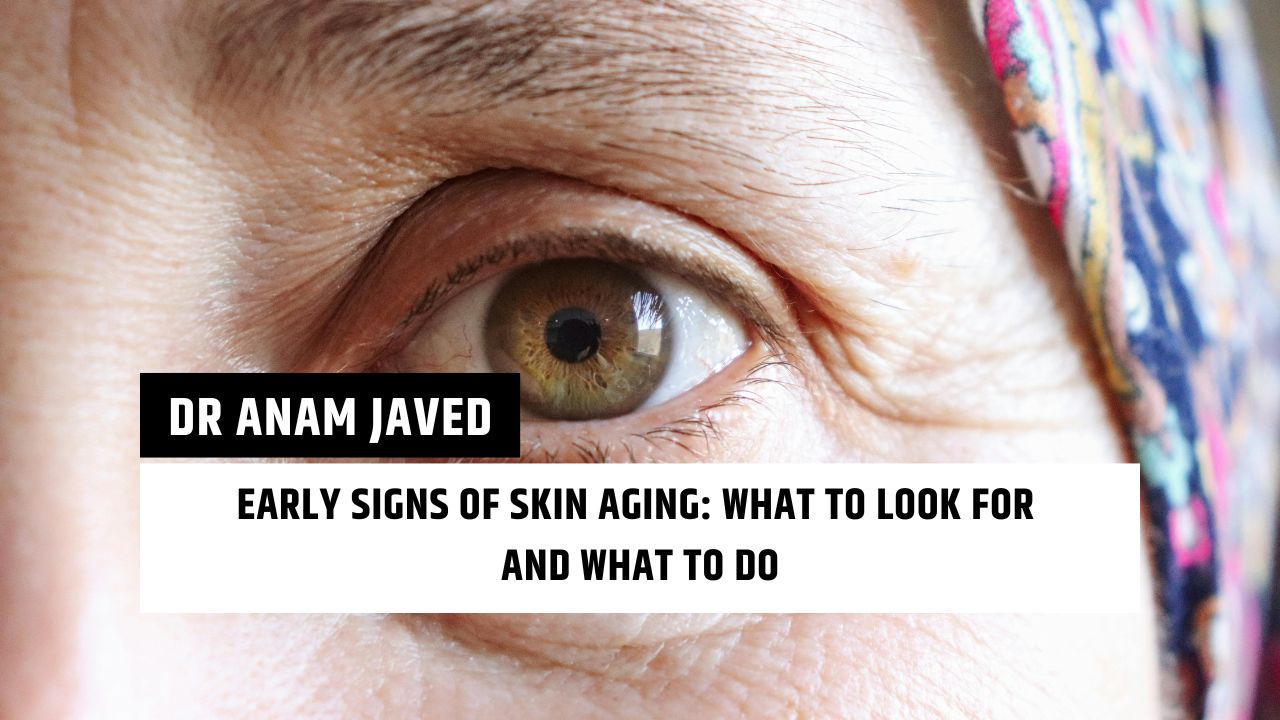
The skin around the eyes is significantly thinner than elsewhere on the face and shows aging signs earliest. Early under-eye changes include:
- Fine lines and crinkling of the delicate skin under and around the eye
- Early dark circles becoming more pronounced as the skin thins and blood vessels show through
- Subtle puffiness or the beginning of under-eye hollowing as fat pads shift
- Loss of the smooth, plump quality of the under-eye area
Visible Pores
As the skin loses collagen and elasticity, the structural support around pores weakens, causing them to appear larger and more noticeable. While pore size itself does not technically change, the loss of surrounding skin firmness makes pores look more prominent. Enlarged-appearing pores are often one of the first textural signs of early skin aging, particularly on the nose and cheeks.
Thinning Lips and Perioral Lines
The lips naturally lose volume and definition with age due to declining collagen and fat. Early signs include the lips appearing slightly thinner or less defined than before, and the appearance of fine vertical lines above the upper lip — sometimes called smoker’s lines, though they can develop in non-smokers as well. The cupid’s bow definition of the upper lip may also become less pronounced.
5. Causes of Premature Skin Aging
While intrinsic aging is inevitable, premature skin aging is largely driven by modifiable factors. Understanding these causes empowers you to make changes that can significantly slow the aging process.
Ultraviolet Radiation (The Leading Cause)
Sun exposure is the single largest contributor to premature skin aging, responsible for an estimated 80 percent of visible facial aging. UV radiation damages the skin through two mechanisms. UVB rays cause direct DNA damage in skin cells (and are responsible for sunburn). UVA rays penetrate more deeply into the dermis and generate free radicals that degrade collagen and elastin fibers. Cumulative UV exposure over years produces a characteristic pattern of photoaging: deep wrinkles, leathery texture, dilated blood vessels, irregular pigmentation, and increased skin cancer risk.
Smoking
Smoking is one of the most potent accelerators of skin aging. The mechanisms are multiple: nicotine causes vasoconstriction, reducing blood flow and nutrient delivery to the skin; over 4,000 chemicals in cigarette smoke generate massive oxidative stress; smoking reduces collagen synthesis; and the repetitive facial movements of smoking contribute to perioral lines. Smokers consistently appear significantly older than their chronological age, and the effects are dose-dependent.
Chronic Sleep Deprivation
Sleep is the skin’s primary repair window. During deep sleep, the body releases growth hormone, which stimulates collagen synthesis and skin cell repair. Chronic sleep deprivation elevates cortisol (the stress hormone), which actively degrades collagen. Studies show that poor sleepers have significantly more signs of skin aging, reduced skin barrier function, and slower recovery from UV exposure and environmental stress than good sleepers of the same age.
Repeated Facial Expressions and Sleep Position
Every facial movement — smiling, squinting, frowning — creases the skin. In young skin with abundant collagen and elasticity, these creases fully spring back. As collagen declines, these repeated movements leave permanent impressions. Similarly, sleeping consistently on one side of the face presses the skin against the pillow night after night, creating sleep lines that over time can become permanent wrinkles on the cheek and chin.
Poor Nutrition
The skin reflects internal nutritional status. Diets high in refined sugars and processed foods accelerate skin aging through a process called glycation — where excess sugar molecules bind to collagen fibers, making them stiff and prone to breakage. Deficiencies in vitamins C, E, and A, zinc, and omega-3 fatty acids impair collagen synthesis, antioxidant defense, and skin barrier integrity. A diet rich in colorful fruits, vegetables, healthy fats, and quality protein provides the raw materials the skin needs to maintain itself.
Chronic Stress
Psychological stress triggers the release of cortisol and other stress hormones that suppress collagen production, impair skin barrier function, trigger inflammation, and accelerate cellular aging. Chronic stress has been linked to measurably shorter telomeres — the protective caps on chromosomes that are a marker of cellular age — meaning chronic stress literally ages cells faster.
Air Pollution
Particulate matter, ozone, and polycyclic aromatic hydrocarbons in urban air pollution generate free radicals that damage the skin’s surface, deplete antioxidant reserves, and degrade collagen. Studies in heavily polluted cities show significantly higher rates of skin aging signs — particularly pigmentation, enlarged pores, and loss of firmness — compared to less polluted environments.
Alcohol Consumption
Regular alcohol consumption dehydrates the skin, depletes vitamins A and C that are essential for collagen synthesis, dilates blood vessels producing persistent redness, and interferes with sleep quality. Heavy drinkers consistently show more pronounced skin aging than non-drinkers of the same age.
6. How Skin Ages at a Cellular Level
Understanding the biological mechanisms behind skin aging helps explain why anti-aging interventions work the way they do.
- Collagen decline: Collagen is the structural protein that gives skin its firmness and plumpness. Production declines approximately 1 percent per year after age 25 and accelerates with UV exposure. By the time visible sagging appears, collagen levels have typically fallen by 20 to 30 percent from their youthful peak.
- Elastin degradation: Elastin fibers give skin its ability to stretch and return to its original shape. UV radiation activates enzymes called matrix metalloproteinases (MMPs) that break down elastin, leading to loss of skin resilience and the development of permanent wrinkles.
- Slowed cell turnover: In youth, the epidermis renews itself approximately every 28 days. This slows to 45 to 60 days or more by middle age, causing dead cells to accumulate and produce dullness, uneven tone, and rough texture.
- Reduced hyaluronic acid: Hyaluronic acid is a naturally occurring molecule in the dermis that holds up to 1,000 times its weight in water, keeping skin plump and hydrated. Its production declines significantly with age, contributing to dryness, volume loss, and the deepening of folds.
- Mitochondrial dysfunction: Aging skin cells have less efficient mitochondria — the cell’s energy-producing structures — leading to reduced capacity for repair, slower metabolism, and increased vulnerability to oxidative stress.
- Cellular senescence: As cells reach the end of their replication capacity, they enter a state called senescence — they stop dividing but remain metabolically active and secrete inflammatory signals. The accumulation of senescent cells in aging skin drives chronic low-grade inflammation (inflammaging) that accelerates further tissue breakdown.
7. Areas Most Affected First
Skin aging does not progress uniformly across the body. Certain areas show signs earliest due to their thinner skin, greater sun exposure, or higher concentration of facial muscles.
- Around the eyes — The periorbital skin is the thinnest on the face and typically shows the first fine lines (crow’s feet) and under-eye changes
- Forehead — Horizontal forehead lines and vertical frown lines develop early due to repetitive muscle movement
- Neck and décolletage — Often overlooked in skincare routines, the neck and chest frequently show premature aging signs from chronic sun exposure
- Back of the hands — The skin here is thin, regularly sun-exposed, and lacks the fat padding that cushions facial aging; age spots and visible veins appear early
- Lips and perioral area — Loss of definition and fine vertical lines develop relatively early, especially in smokers
8. Early Signs by Skin Type
The early signs of aging present somewhat differently depending on skin type, which affects how quickly certain changes appear and which features are most prominent.
- Dry skin — Tends to show fine lines and surface dehydration lines earliest; may appear to age faster visually due to reduced natural moisture
- Oily skin — Natural sebum provides a degree of protection; fine lines may appear later, but enlarged pores and uneven texture are often more prominent
- Combination skin — Shows different signs in different zones; the T-zone may retain a more youthful appearance longer while the cheeks show dryness and early lines
- Sensitive skin — Chronic redness, broken capillaries, and uneven tone may appear early due to a compromised skin barrier and heightened inflammatory response
- Darker skin tones — Generally show deeper wrinkles later than lighter skin tones due to higher melanin content providing natural UV protection, but are more prone to hyperpigmentation and uneven tone as early aging signs
9. Proven Treatments and Prevention Strategies
The most powerful anti-aging strategy is prevention — protecting the skin from the factors that accelerate aging before visible signs appear. However, multiple effective treatments are available for those who wish to address existing signs.
Sun Protection — The Single Most Important Step
Daily use of broad-spectrum sunscreen with SPF 30 or higher is the most evidence-based anti-aging intervention available. It protects against both UVA-driven photoaging and UVB-driven DNA damage. Dermatologists recommend applying sunscreen every morning as the final step of the skincare routine, regardless of weather or season, and reapplying every two hours when outdoors. Physical sunscreens containing zinc oxide or titanium dioxide are particularly recommended for sensitive skin. Wearing sun-protective clothing, hats, and UV-blocking sunglasses adds further protection.
Retinoids — The Gold Standard Anti-Aging Ingredient
Retinoids (vitamin A derivatives) are the most extensively studied and clinically proven class of anti-aging skincare ingredients. Prescription-strength tretinoin has decades of randomized controlled trial data demonstrating that it stimulates collagen synthesis, accelerates cell turnover, reduces fine lines and wrinkles, improves pigmentation, and refines skin texture. Over-the-counter retinol is less potent but effective for prevention and mild improvement when used consistently. Retinoids should be introduced gradually, used at night, and always paired with SPF during the day as they increase UV sensitivity.
Professional Treatments
- Chemical peels — Remove the outer layer of damaged skin to stimulate renewal; range from superficial (glycolic acid) to deep (TCA) depending on the degree of correction needed
- Laser and light therapies — Fractional lasers, IPL (intense pulsed light), and radiofrequency devices stimulate collagen production, address pigmentation, and improve texture
- Microneedling — Creates controlled micro-injuries that trigger the skin’s natural repair response and collagen synthesis; effective for texture, fine lines, and early laxity
- Injectable treatments — Botulinum toxin (Botox) relaxes muscles responsible for expression lines; hyaluronic acid dermal fillers restore volume loss; these are among the most popular cosmetic interventions globally
10. Skincare Ingredients That Actually Work
The skincare market is saturated with products making anti-aging claims. The following ingredients have genuine, peer-reviewed evidence supporting their effectiveness.
- Retinol and retinoids — Vitamin A derivatives; the most proven anti-aging ingredient class; stimulate collagen, accelerate cell turnover, reduce fine lines and pigmentation
- Vitamin C (ascorbic acid) — A potent antioxidant that neutralizes free radicals, stimulates collagen synthesis, and inhibits melanin production to improve pigmentation; most stable in concentrations of 10 to 20 percent in L-ascorbic acid form
- Niacinamide (Vitamin B3) — Improves skin barrier function, reduces pore appearance, evens skin tone, decreases inflammation, and has modest anti-aging effects; well-tolerated by all skin types including sensitive skin
- Hyaluronic acid — A powerful humectant that draws moisture into the skin; provides immediate plumping and hydration; reduces the appearance of surface dehydration lines
- Peptides — Short chains of amino acids that signal the skin to produce more collagen; palmitoyl tripeptide and matrixyl are among the best-studied; effective as preventive and early-aging treatments
- AHAs and BHAs — Alpha hydroxy acids (glycolic, lactic) and beta hydroxy acids (salicylic) accelerate cell turnover, smooth texture, fade pigmentation, and improve radiance; use with SPF as they increase photosensitivity
- Ceramides — Lipids that are key components of the skin barrier; ceramide-containing moisturizers restore barrier integrity, reduce transepidermal water loss, and improve hydration in aging skin
- SPF (Sunscreen) — Technically not a treatment but the most powerful anti-aging tool available; prevents further photoaging from occurring
11. Lifestyle Habits That Accelerate Skin Aging
Beyond skincare products and treatments, daily lifestyle habits have a profound impact on how quickly the skin ages. The following habits are among the most damaging.
- Skipping sunscreen — The single highest-impact mistake; unprotected UV exposure every day accumulates into decades of photoaging
- Smoking — Consistently associated with premature, severe skin aging; accelerates collagen breakdown, restricts blood flow, and generates massive oxidative stress
- Chronic sleep deprivation — Interferes with the skin’s nightly repair cycle and elevates cortisol, which degrades collagen
- High sugar diet — Excess sugar causes glycation, which stiffens and breaks down collagen and elastin fibers
- Alcohol consumption — Dehydrates skin, depletes antioxidants, impairs sleep quality, and promotes inflammation
- Not removing makeup before sleep — Makeup traps pollutants and free radicals against the skin all night, accelerating oxidative damage
- Excessive face washing or harsh products — Strips the skin’s natural moisture barrier, promoting dryness and inflammation that accelerate aging
- Chronic stress without management — Persistently elevated cortisol suppresses collagen production and accelerates cellular aging
- Sedentary lifestyle — Regular exercise improves circulation, delivering oxygen and nutrients to skin cells; studies suggest regular exercisers have measurably younger-appearing skin
12. When to See a Dermatologist
While a good at-home skincare routine addresses many early aging concerns, certain situations warrant professional dermatological evaluation.
- You have noticed a new or changing skin lesion, dark spot, or mole — any unexplained skin change should be evaluated to rule out skin cancer
- Over-the-counter products are not providing adequate results after consistent use over several months
- You are considering prescription retinoids, chemical peels, or other professional treatments and need personalized guidance
- You have a family history of skin cancer or have accumulated significant sun exposure over your lifetime
- You are developing redness, rosacea, or broken capillaries that are becoming more pronounced
- You want a comprehensive skin assessment and a professionally tailored anti-aging skincare plan
- You are interested in injectable treatments (Botox, fillers) or laser procedures and want to understand your options
A board-certified dermatologist can assess your skin’s biological age, identify your specific concerns, and recommend a treatment pathway that is safe, effective, and appropriate for your skin type, tone, and goals.
13. Conclusion
The early signs of skin aging — fine lines, loss of radiance, subtle changes in texture and firmness, early pigmentation irregularities, and under-eye changes — typically begin appearing in the late twenties and early thirties, long before most people start thinking about anti-aging skincare. The good news is that up to 80 percent of visible skin aging is caused by preventable external factors, primarily sun exposure and lifestyle choices.
The most powerful anti-aging strategy is simple: apply broad-spectrum SPF 30 or higher every single day without exception, introduce a retinoid into your routine, support your skin barrier with a good moisturizer, maintain a healthy diet and sleep schedule, and avoid smoking. These evidence-based steps, taken consistently from your twenties onward, have been shown in multiple clinical studies to significantly slow the rate of visible skin aging.
If you are already seeing early signs, do not be discouraged. Effective, well-studied treatments ranging from over-the-counter retinol to professional laser therapies can meaningfully reverse visible changes. The earlier you start, the better your results will be. Consult a board-certified dermatologist for a personalized plan tailored to your unique skin.
Medical Disclaimer: This article is for general informational and educational purposes only. It does not constitute medical advice and should not replace consultation with a licensed dermatologist or healthcare provider. Always seek professional guidance for skin concerns, diagnosis, and treatment.
Book an Appointment
It’s easy and free!
Tags:anti-aging skincarecollagen lossearly signs of skin agingextrinsic agingfine lineshow to prevent wrinkleshyaluronic acidintrinsic agingloss of skin elasticityphotoagingpremature skin agingretinol for aging skinskin aging causesskin aging in 20sskin aging in 30sskin aging preventionskin aging treatmentSPF anti-agingsun damage skinvitamin C serumwrinkles